
Article
How Websites Work: A Simple Explanation
Understanding domains, hosting, and website code using a familiar analogy - your house.
If you’ve ever felt confused by terms like “hosting,” “domain,” or “server,” you’re not alone. The web industry loves jargon. But the pieces of a website aren’t that complicated once you see how they fit together.
The easiest way to understand it? Think of your website like a house.
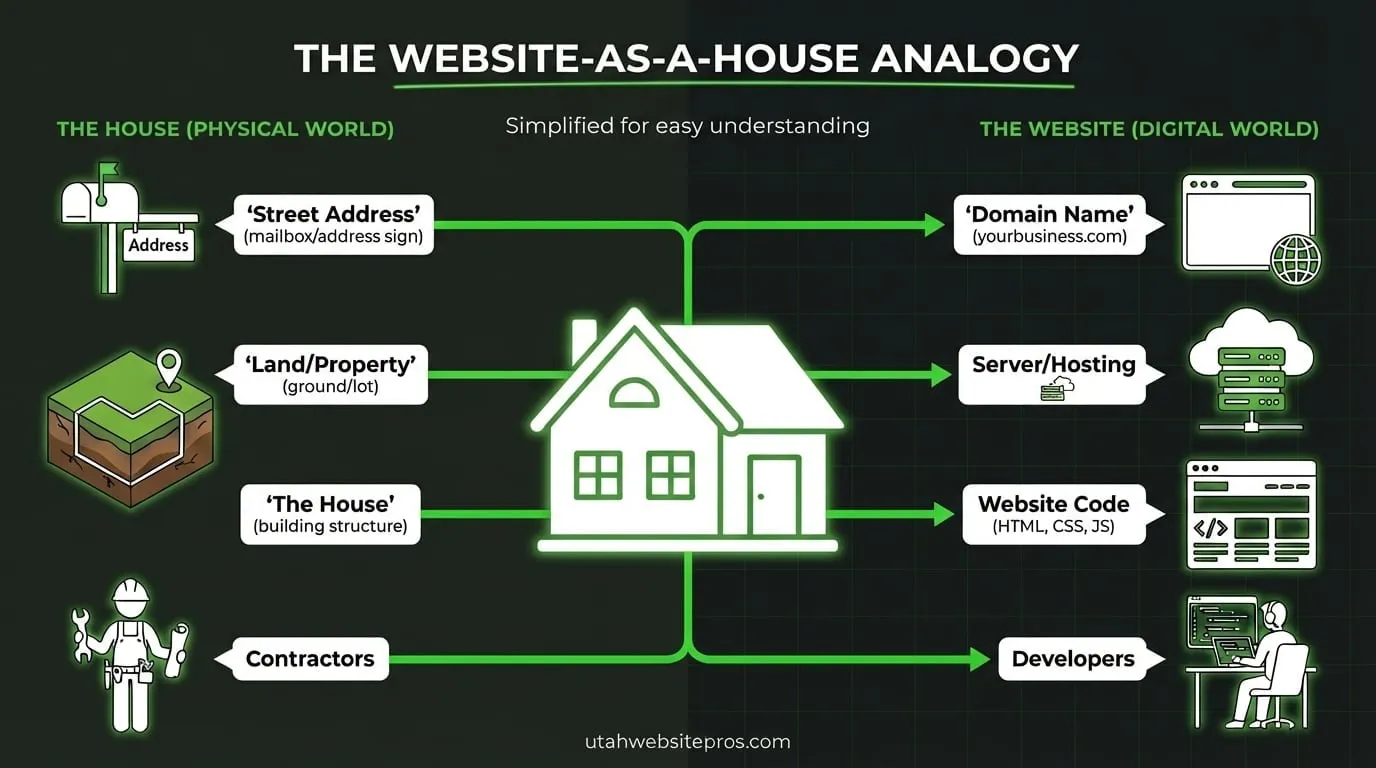
The Domain Name is Your Address
Just like your home has a street address so people can find you, your website has a domain name — like yourbusiness.com.
When someone types your domain into their browser, it tells the internet where to look. Without an address, no one could find your house. Without a domain, no one can find your website.
You purchase a domain from a registrar (companies like Namecheap, Cloudflare, Hover, or GoDaddy) and pay a small annual fee to keep it.
Key point: You don’t “own” a domain forever. You rent it. If you stop paying, someone else can register it.
The Server is Your Property
Before you can build a house, you need land to build it on. For websites, that land is called a server — a computer that’s always connected to the internet, ready to show your website to visitors.
Most businesses don’t own their own servers. Instead, they rent space from a hosting provider (companies like Vercel, Netlify, or traditional hosts like SiteGround). This is like leasing a lot in a neighborhood instead of buying rural acreage.
Different hosting options exist for different needs:
- Shared hosting — You share a server with many other websites. Cheap, but can be slow.
- Cloud hosting — Your site runs on a network of servers. More reliable and scales with traffic.
- Dedicated hosting — You rent an entire server. Expensive, but maximum control.
For most small business websites, cloud hosting offers the best balance of performance and cost.
The Website Code is Your House
The actual house — the structure people see and interact with — is your website’s code. This includes:
- HTML — The foundation and framing. The basic structure of your pages.
- CSS — The paint, finishes, and styling. What makes it look good.
- JavaScript — The electrical and plumbing. The interactive, functional parts.
- Content — The furniture and decor. Your text, images, and videos.
Just like houses come in different styles and quality levels, websites range from simple templates to custom-built solutions. A template is like a tract home — quick and affordable, but identical to many others. A custom website is like hiring an architect — unique to your needs, but requires more investment.
Developers Are Your Contractors
When you need to build a house or remodel your kitchen, you hire contractors. When you need to build a website or add new features, you work with developers.
Like contractors, developers have different specialties:
- Front-end developers focus on what visitors see and interact with
- Back-end developers handle the behind-the-scenes logic and databases
- Full-stack developers do both
And just like with contractors, you can hire developers for a one-time project (build the site) or ongoing work (maintenance, updates, and improvements).
How the Pieces Work Together
When someone visits your website, here’s what happens:
- They type your domain name into their browser
- The internet looks up which server that domain points to
- The server sends your website code to their browser
- Their browser displays your site
All of this happens in milliseconds. And when everything is set up correctly, you don’t have to think about it — it just works.
What This Means for Your Business
Understanding these pieces helps you make better decisions:
- Keep your domain registration accessible. Make sure you (not just your developer) have login credentials to your registrar.
- Know who hosts your site. If you ever need to switch developers, you need to know where your site lives.
- Separate concerns. Your domain, hosting, and developer don’t all have to be the same company. Sometimes it’s better if they’re not.
Have questions about your website setup? Get in touch — we’re happy to help you understand what you have and what you might need.